What Your Child Actually Learns in Playschool (That You Don’t See)
- Ducky's Play and Development Centre

- Sep 2, 2025
- 2 min read
Updated: Sep 26, 2025
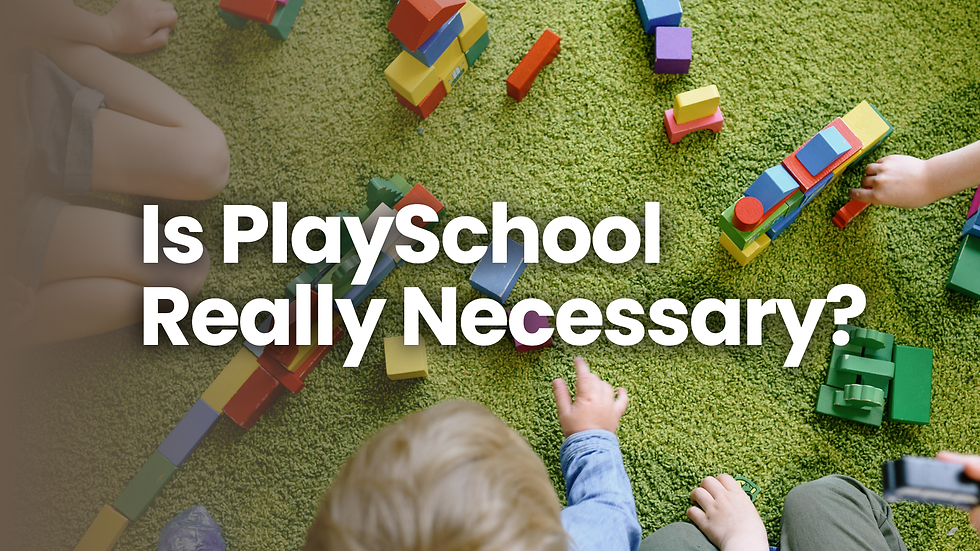
When you drop your toddler off at playschool, it may look like their day is filled with building blocks, singing songs, or splashing paint on paper. And while that’s true, there’s much more happening beneath the surface. Every giggle, puzzle, and pretend play activity is shaping important life skills — the kind that last far beyond the classroom.
At Ducky’s Play and Development Centre, we follow the Early Years Learning Framework (EYLF) to ensure that play is purposeful. Our programs are designed to nurture the whole child — emotionally, socially, physically, and cognitively. Here’s what your child is actually learning in playschool (that you might not notice right away).

1. Emotional Resilience
Playschool is where toddlers begin to understand big feelings. Whether it’s sharing a toy, waiting for their turn, or dealing with frustration, children are practicing patience, empathy, and self-control. These small but powerful lessons help build resilience that supports them through school and life.
2. Problem-Solving Skills
Every challenge — from figuring out how to stack blocks higher without them falling, to deciding who plays which role in a pretend game — teaches children how to think critically. Playschool gives toddlers the space to experiment, make mistakes, and find creative solutions on their own.
3. Social Confidence
Group play is about more than fun. It’s where toddlers learn how to communicate, listen, take turns, and cooperate with others. These early interactions build confidence in social settings, making the transition to preschool and formal schooling much smoother.
4. Independence
At Ducky’s, simple routines like putting on shoes, tidying up after snacks, or choosing an activity help toddlers develop independence. Each small responsibility empowers children to take initiative, make choices, and feel capable in their everyday lives.
5. Creativity and Imagination
Through open-ended activities like painting, storytelling, and role play, children are encouraged to think outside the box. This creative freedom sparks curiosity, problem-solving, and a love for learning that grows with them.

More Than Just Play
As Australian early childhood expert Dr. Red Ruby Scarlet explains: “Play-based learning is not ‘just play’ — it’s where children develop the intellectual, social, and emotional foundations for lifelong success.”
At Ducky’s Play and Development Centre, we believe that playschool is more than preparation for academics — it’s preparation for life. So the next time you ask your toddler, “What did you do at playschool today?” and they answer, “I played,” you’ll know there’s a whole world of learning happening behind that word.
Looking for a nurturing playschool in the Philippines?
Discover how Ducky’s Play and Development Centre helps toddlers grow in confidence, resilience, and creativity through play-based learning. Visit us at www.duckys.ph
.png)
Comments