Are You Setting Goals That Help Your Child Thrive—or Stress Them Out?
- Ducky's Play and Development Centre

- Sep 22, 2025
- 3 min read
When your child is between 1.5 and 4 years old, every day brings something new—first words, new friendships, endless questions, and bursts of independence. As parents, it’s natural to want to set goals that guide this growth. But in the toddler years, goals should nurture curiosity and joy, not create pressure.
According to the Early Years Learning Framework (EYLF) in Australia, children learn best through play, exploration, and relationships. The role of parents and educators is not to push children ahead but to create environments where they feel safe, confident, and motivated to learn at their own pace.
Rather than rushing children into formal academics, EYLF emphasizes that the role of parents and educators is to nurture environments where children feel safe, confident, and motivated to learn at their own pace.
Why this matters:
Play-based learning builds lifelong skills. Studies show that children who engage in structured and unstructured play develop stronger problem-solving skills, creativity, and resilience compared to those in highly academic early environments. For instance, a longitudinal study in New Zealand found that preschoolers in play-based programs demonstrated greater social adaptability and stronger communication skills in primary school.
Relationships are the heart of learning. Harvard’s Center on the Developing Child highlights that “responsive relationships are the most essential ingredient in building healthy brain architecture.” In other words, when children feel secure with their teachers and caregivers, they’re more open to curiosity, exploration, and discovery.
Confidence before content. A case study from a Sydney childcare center showed that toddlers who were introduced to gentle routines and play-based group activities—not early literacy drills—developed higher levels of independence and confidence when transitioning to preschool settings.
What this looks like in practice:
Instead of drilling numbers and letters, teachers might encourage children to count seashells in a sensory bin or tell stories using puppets.
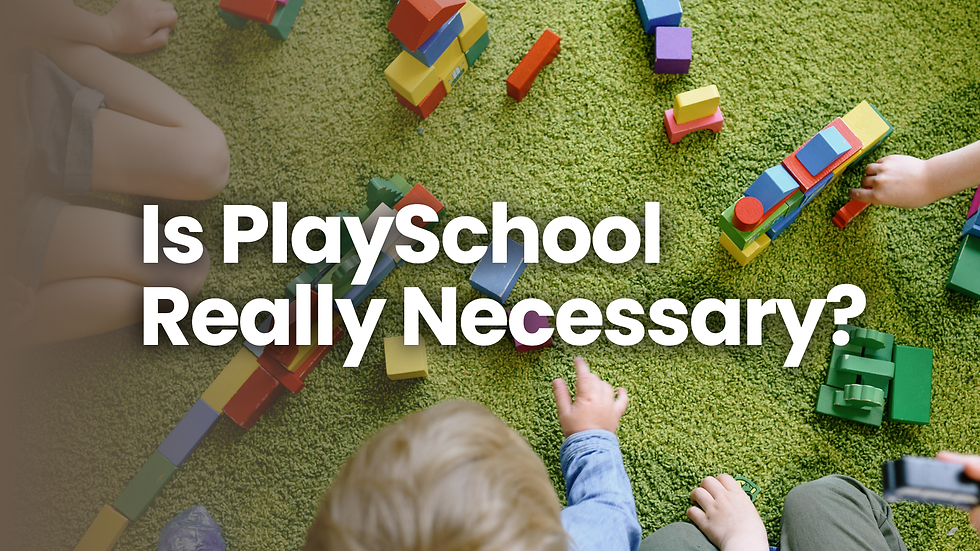
When a child is interested in stacking blocks, educators use that opportunity to introduce balance, shapes, and even early math concepts—without forcing it.
Through role play, music, and movement, children not only learn about the world but also build fine motor skills, social skills, and emotional regulation.
The EYLF reminds us that “childhood is a time to be, to belong, and to become.” Our role as educators and parents is to protect that childhood space—to let kids be kids, and to trust that the learning will come naturally when curiosity is nurtured in a safe and joyful environment.

Here are gentle ways you can support your toddler’s growth while keeping things developmentally appropriate:
1. Think in terms of experiences, not achievements Instead of aiming for “my child should know all the letters of the alphabet by age 3,” focus on rich experiences: reading together, singing songs, pointing out letters on a walk. These experiences naturally build literacy without pressure.
2. Follow their interests Professor Marilyn Fleer, an early childhood education researcher in Australia, notes that children’s curiosity is the foundation of their learning. When we nurture what excites our toddlers—whether it’s blocks, bugs, or banging on pots—we support them in developing confidence, creativity, and joy in discovery.
3. Keep goals simple and flexible At this age, goals should look like: “learning to share with a friend,” “naming feelings,” or “pouring water independently.” These small steps build the foundation for later learning.
4. Celebrate the process, not perfection The EYLF emphasizes Belonging, Being, and Becoming. Your toddler is learning who they are in the world. Celebrate effort (“You tried putting on your shoes by yourself—well done!”) instead of focusing only on outcomes.
5. Remember that play is the work of childhood
As early childhood advocate Fred Rogers said, “Play gives children a chance to practice what they are learning.” Every time your child builds a tower, scribbles a picture, or plays dress-up, they are practicing problem-solving, creativity, and social skills.

At Ducky’s, we support families in raising confident, curious, and resilient learners. We believe goals for toddlers should be gentle guideposts, not pressure points. When children feel supported, respected, and encouraged, they thrive—not just today, but for years to come.
Childhood isn’t a race—it’s a journey of joyful discovery. Let’s set the stage for growth by encouraging exploration, not perfection.


.png)
Comments